Ever wondered what the legal intricacies are when buying a condo in Thailand as a foreigner? Understanding the regulations is crucial to making a safe and informed investment.
Thailand's vibrant culture and appealing lifestyle make it a popular destination for foreigners looking to purchase property. However, buying a condominium as a foreigner involves navigating specific legal requirements that are designed to regulate foreign ownership. These regulations matter now more than ever, as Thailand continues to attract expats and digital nomads seeking to invest in the country's real estate market. Knowing the legal landscape before diving into a purchase can help avoid costly mistakes and ensure a smooth transaction.
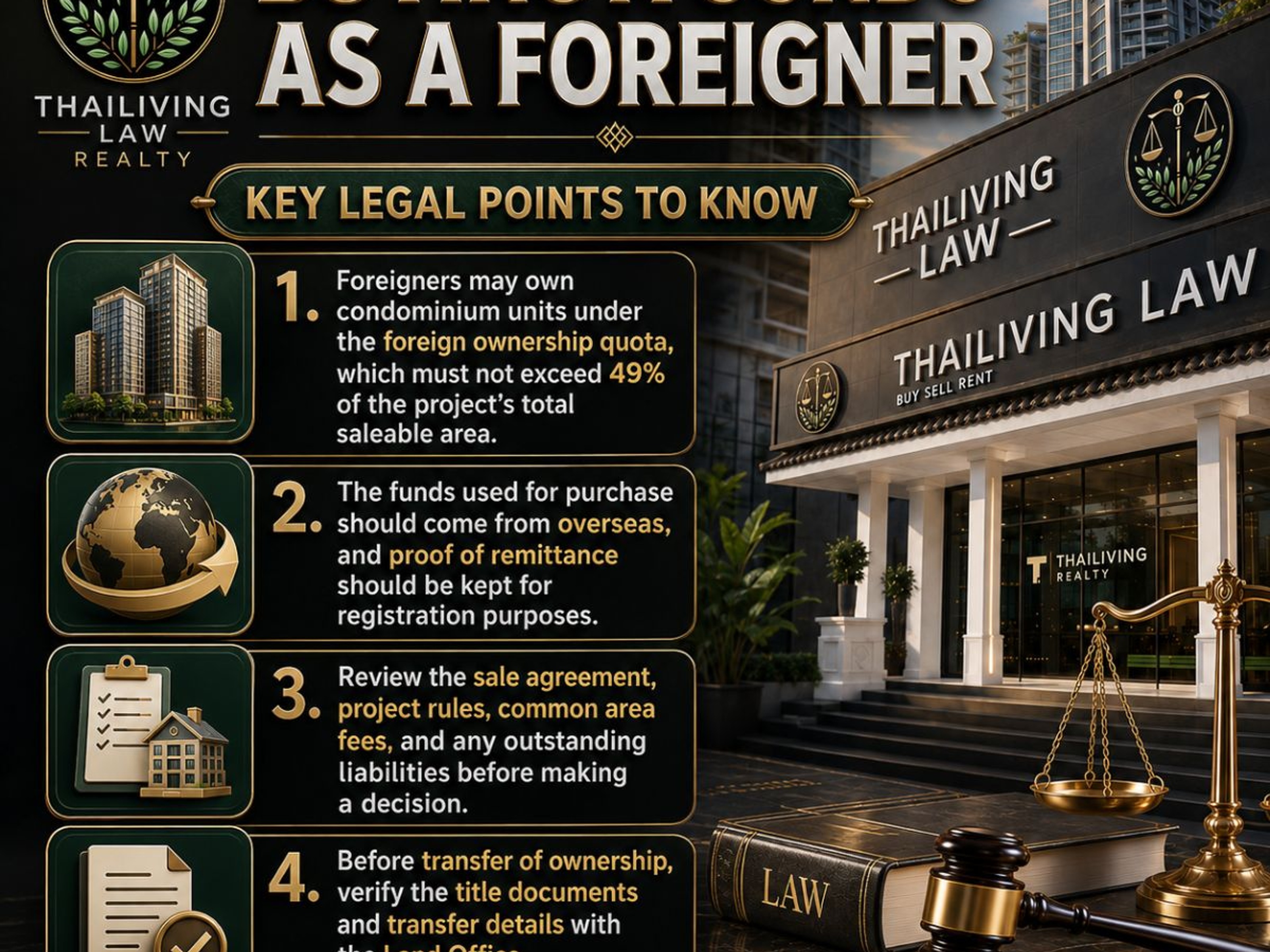
According to Thai law, foreigners are permitted to own condominium units, but there are important restrictions to be aware of. One key requirement is that foreign ownership in a condominium project must not exceed 49% of the total saleable area. This limitation is enforced to maintain a balance between foreign and local ownership. Additionally, funds used to purchase the condominium should typically be transferred from overseas, and purchasers must provide proper evidence of remittance to comply with legal standards. Failure to adhere to these requirements can lead to complications or even penalties.
Thai officials enforce these regulations through a series of checks and processes. When purchasing a condo, buyers must present the necessary documentation to the Land Office, which includes verifying title documents and transfer details. The Land Office plays a critical role in ensuring that all legal requirements are met before ownership is transferred. This process underscores the importance of thorough preparation and understanding of the legal obligations involved in purchasing property in Thailand.
The groups most affected by these regulations include expats, digital nomads, and foreigners with Thai assets or family connections. For these individuals, understanding the legal framework is essential to protect their investments and avoid potential pitfalls. Mixed Thai-foreign families may also find these regulations relevant, especially when considering joint ownership or inheritance matters.
Common mistakes in this process often stem from misconceptions about foreign ownership limits or the necessary documentation for transferring funds. Some buyers might overlook the importance of reviewing the sale agreement, project rules, common area fees, and any outstanding liabilities, leading to unexpected issues post-purchase. Another frequent error is failing to verify title documents thoroughly with the Land Office, which can result in disputes or complications.
To ensure compliance with Thai property laws, foreigners should take several concrete steps. First, consult with a legal expert to understand the nuances of property ownership in Thailand. Review all relevant documents, including the sale agreement and project rules, and ensure that funds are transferred correctly from overseas. Before finalizing the purchase, verify all title documents and transfer details with the Land Office. These steps not only help in adhering to legal requirements but also in securing a safe and sound investment.
Navigating the legal landscape of buying a condo in Thailand as a foreigner can be complex, but with the right knowledge and preparation, the process can be much smoother. Understanding the regulations and taking proactive steps can help mitigate risks and ensure a successful property purchase.
Contact Thailiving Law for a consultation and ensure your property investment in Thailand is secure and compliant.