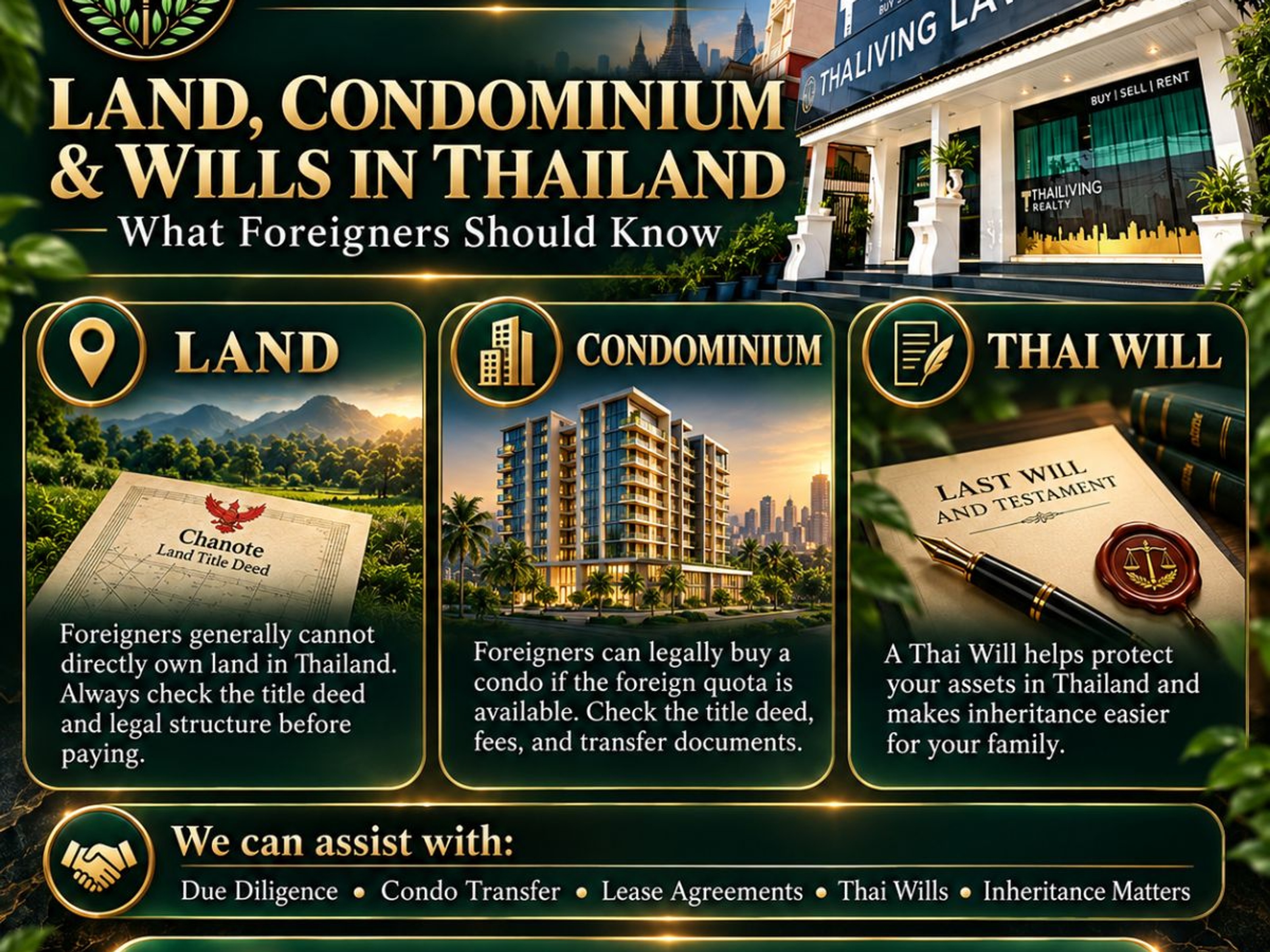
Ever wondered if foreigners can own land in Thailand?
Living, investing, or owning property in Thailand can involve important legal questions, especially for foreign nationals. Before buying property, signing an agreement, or planning how your assets will be transferred to your family, it is important to understand your legal rights and restrictions under Thai law.
In general, foreign nationals are restricted from directly owning land in Thailand, although Thai law provides certain limited exceptions and specific legal procedures. Foreigners considering a house, villa, business property, or long-term investment should therefore obtain legal advice before making any payment or signing documents. A lawyer can assist with land title deed verification, due diligence before purchase, sale and purchase agreements, lease agreements, usufruct and other registered rights, land office registration, legal structures for property investment, and reviewing risks involving nominee arrangements.
Using a Thai person or company merely as a nominee to hold land for a foreigner can create serious legal risks.
On the other hand, foreigners may legally own condominium units in Thailand when the legal requirements are satisfied. One important requirement is the foreign ownership quota, which generally cannot exceed 49% of the total area of all units in the condominium. Before purchasing a condominium, buyers should check whether foreign quota is still available, the condominium title deed, ownership and encumbrances, outstanding common-area fees, sale and purchase agreement, source and transfer of purchase funds, land office transfer documents, taxes and transfer-related expenses.
A legal review before transferring money can help prevent problems that may be difficult or expensive to resolve later.
For foreigners who own assets in Thailand, it is advisable to prepare a Thai Will dealing specifically with their assets located in Thailand. A Will may cover assets such as condominium units, houses or property-related rights, bank accounts, vehicles, company shares, personal belongings, investments, and other assets in Thailand. Thai law recognizes several forms of wills. For example, an ordinary written will must meet legal formalities, including being made in writing, dated, signed by the testator, and witnessed in accordance with the law.
A properly prepared Will can make it clearer who should receive your assets and may reduce complications for your family during the inheritance process.
Protecting your property, investment, and family is crucial, particularly where Thai law, foreign ownership, and international family relationships are involved. Our legal team can assist foreign clients with land and property due diligence, condominium purchase and transfer, sale and purchase agreements, lease and property agreements, land office registration, Thai Wills, inheritance matters, estate administration and probate, and legal consultation for foreigners.
Before you buy, transfer, invest, or prepare your estate, speak with a lawyer first.
Contact Thailiving Law for a consultation