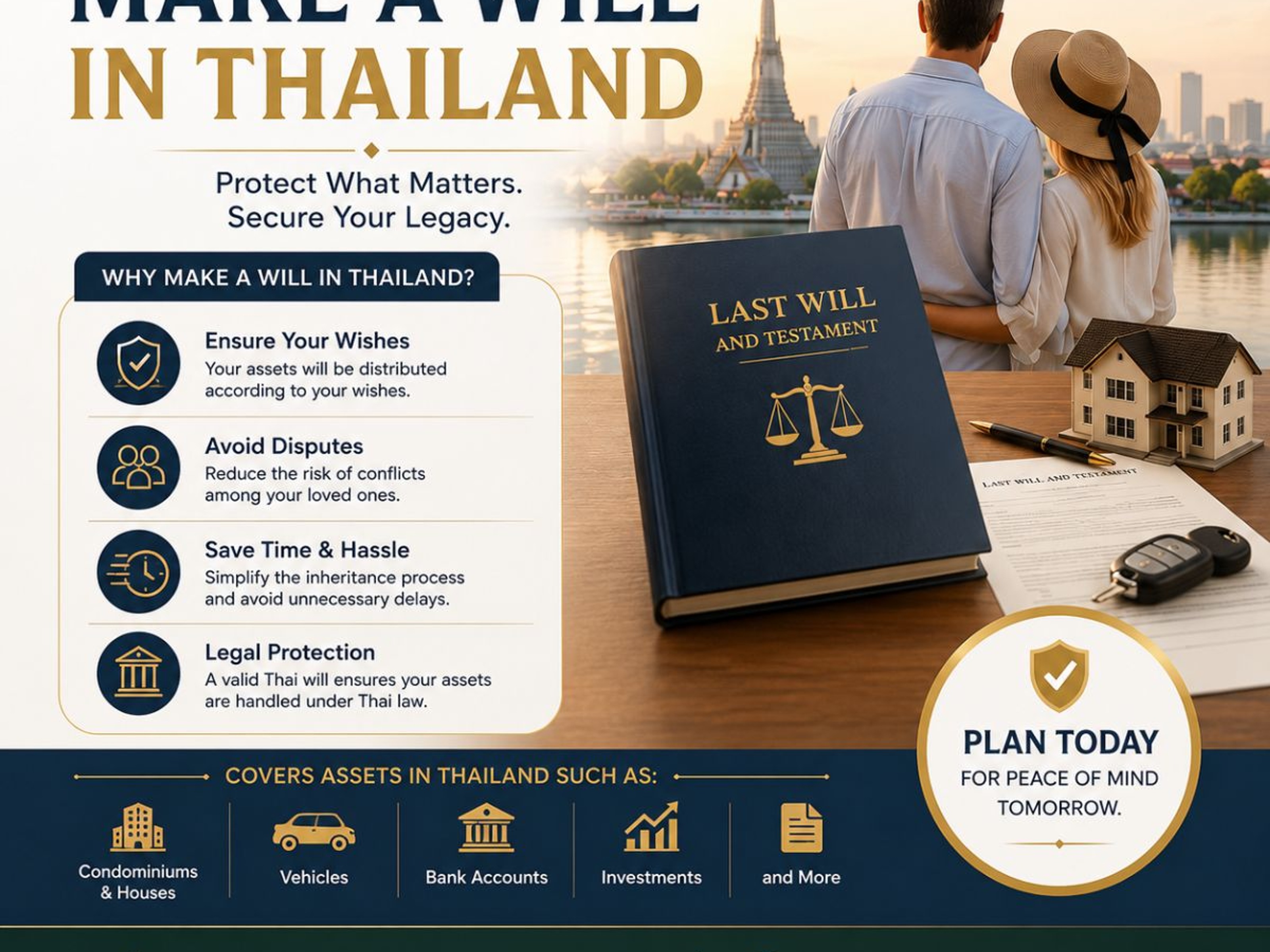
Ever wondered what happens if you don't have a will in place for your Thai assets? Understanding the intricacies of making a will in Thailand is crucial for foreigners with ties to the country.
In recent years, Thailand has become a popular destination for expats, digital nomads, and foreigners with Thai assets or family. With this influx, the importance of having a well-drafted will that complies with Thai law has never been more significant. A will ensures that your assets are distributed according to your wishes, and not left to the complexities of Thai inheritance law, which may not align with your intentions. This is especially critical for those with mixed Thai-foreign families, where cross-border legal considerations can further complicate matters.
Under Thai law, a will must comply with the requirements set out in the Civil and Commercial Code. The code specifies that a will must be in writing and signed by the testator, or made in the presence of at least two witnesses. Failure to adhere to these formalities can render a will invalid. Moreover, the law outlines specific provisions regarding the distribution of assets, which can affect how property is passed on to heirs. The penalties for not having a valid will can be severe, as the distribution of assets will default to statutory inheritance rules, potentially leading to disputes among family members.
In practice, Thai officials enforce these requirements rigorously. When a foreigner passes away in Thailand, the probate process is initiated, during which the will is examined for compliance with legal standards. This process involves submitting the will to the court, along with necessary documents such as the death certificate and proof of ownership for assets. The court will then determine the validity of the will and oversee the distribution of the estate. It's a meticulous process that underscores the need for a properly drafted will.
Foreigners most affected by these legal requirements are those with significant assets in Thailand, such as property, businesses, or bank accounts. Additionally, those with Thai spouses or children need to be particularly mindful of how their estate plans align with Thai laws. Without a valid will, these individuals risk having their assets distributed in a manner that may not reflect their personal wishes or the needs of their family.
A common mistake foreigners make is assuming that their home country's will covers their Thai assets. This misconception can lead to unintended consequences, as Thai courts require a will that meets local legal standards. Another error is neglecting to update a will after significant life changes, such as marriage, divorce, or the birth of a child. Failing to do so can result in outdated provisions that do not reflect the current family or financial situation.
To ensure compliance, foreigners should take concrete steps to draft a will that meets Thai legal requirements. Consulting with a Thai legal expert is crucial, as they can provide guidance on how to structure your will to ensure it is recognized by Thai courts. Additionally, regularly reviewing and updating your will is essential to accommodate any changes in your personal or financial circumstances. By taking these steps, you can ensure that your assets are distributed according to your wishes and provide peace of mind for your loved ones.
Contact Thailiving Law for a consultation on drafting your Thai will.